The Portland
issue.
Five illustrated stories, from the working waterfront to the school lunch line.Read the issue TRYON MEDIA GROUP NOV 2026TMG
MonthlyThe Portland issue
TMG MONTHLY / NOVEMBER 2026
The Portland issue
A public ledger, a lunch tray, a playing field. Five stories about the decisions that show up in everyday Portland life.

The missing subtotal
Ninety arts awards. One printed figure that won’t reconcile.
Read Portland’s operating-support schedule row by row and the base awards come to $2,873,000. The printed subtotal misses $216,750. For anyone trying to follow the money, that single line changes how the rest of the page reads.
Access awards occupy a separate column. They add another $850,000, bringing the combined award rows to $3,723,000. The discrepancy is in the schedule’s arithmetic. Whether and when an organization received its money takes a payment record.

A noodle built for school lunch
The lunch line helped write the recipe for Umi Organic’s yakisoba.
In May 2019, Lola Milholland went back to Richmond Elementary, the Portland school she had attended. This time she was there to see what the students made of Umi Organic’s whole-grain yakisoba. By fall, the noodles were on school menus in Portland and Eugene.
A school kitchen set the terms. Umi needed a noodle that met school nutrition standards and could finish in an oven by the tray. Durum and Edison wheat from Camas Country Mill in Junction City supplied the Oregon-grown whole grain.

The price of a pitch
At East Delta Park, the choice underfoot can change a youth team’s four-hour bill by $230.
Start with a coach trying to budget four hours of field time. At the city’s 2027 youth rates, those hours cost $64 on grass and $294 on synthetic turf. That is before the application fee.
A fee schedule can answer the budget question well before a coach knows where the team will play. The allocation and the team’s actual time slot come later.

Ten miles of riverbed, one map
An EPA map follows one federal cleanup through three very different stages of design.
The cleanup stretches roughly ten miles along the lower Willamette. Read the October map from Cathedral Park to Willamette Cove to Swan Island Basin and each place tells a different part of the engineering story.
At Cathedral Park, engineers had finished the 60 percent design. The cove’s comparable drawings were on EPA’s desk for review. At Swan Island Basin, the final design was underway. The percentages measure progress on the plans. Measuring what has come out of the river takes a different record.
Before the first shovel
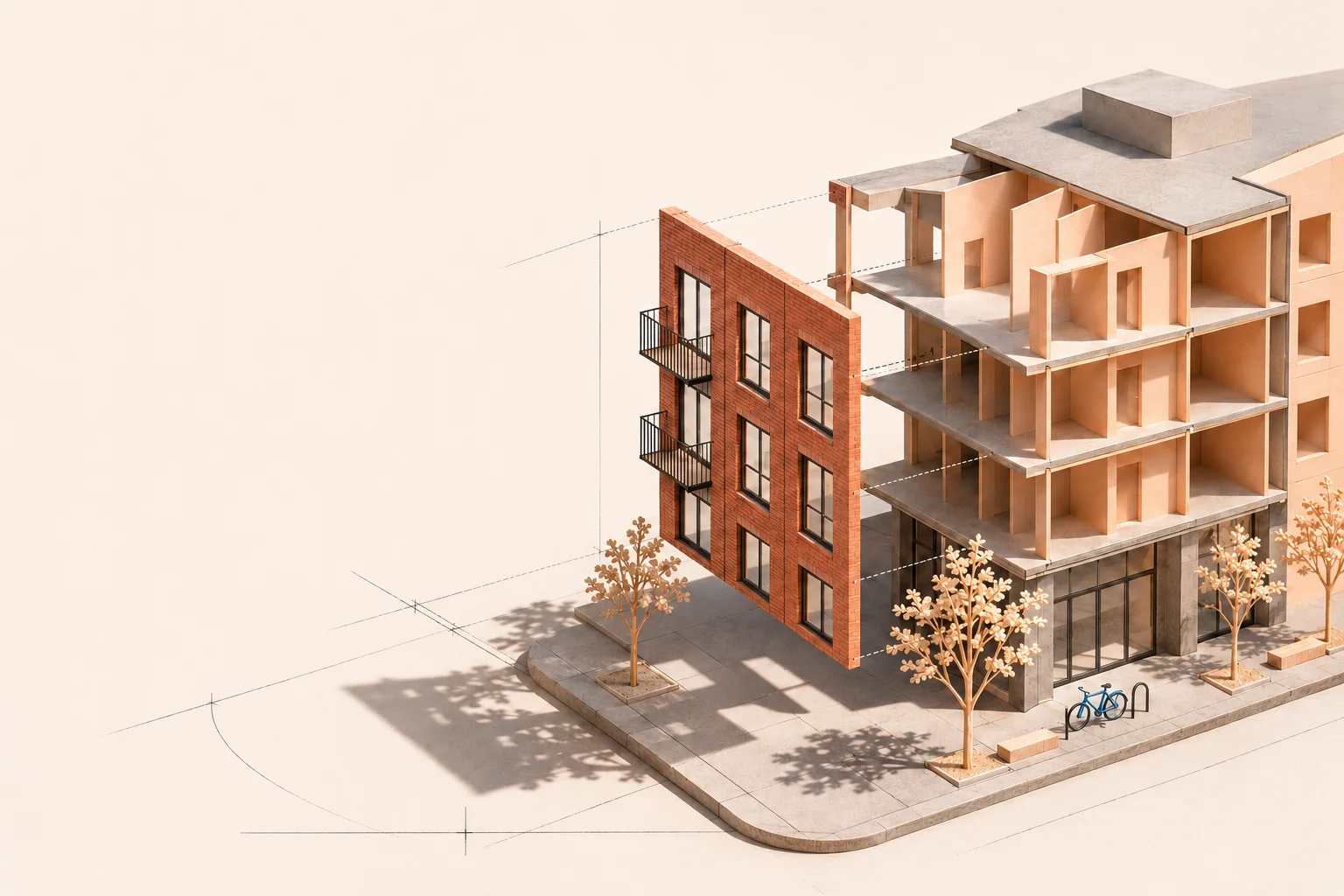
The long wait for 64 homes on Foster Road began before crews broke ground.
Metro expected construction at 73Foster to take thirteen months. When crews broke ground in June 2025, that clock started. By July 2026 the building had taken the projected thirteen months.
Look one entry earlier in the project record. Groundbreaking came seventeen months after the original target. For a reader asking where the time went, those two dates tell a different story from the construction schedule alone.
Cover commissioned for this issue · AI illustrationBack to contents